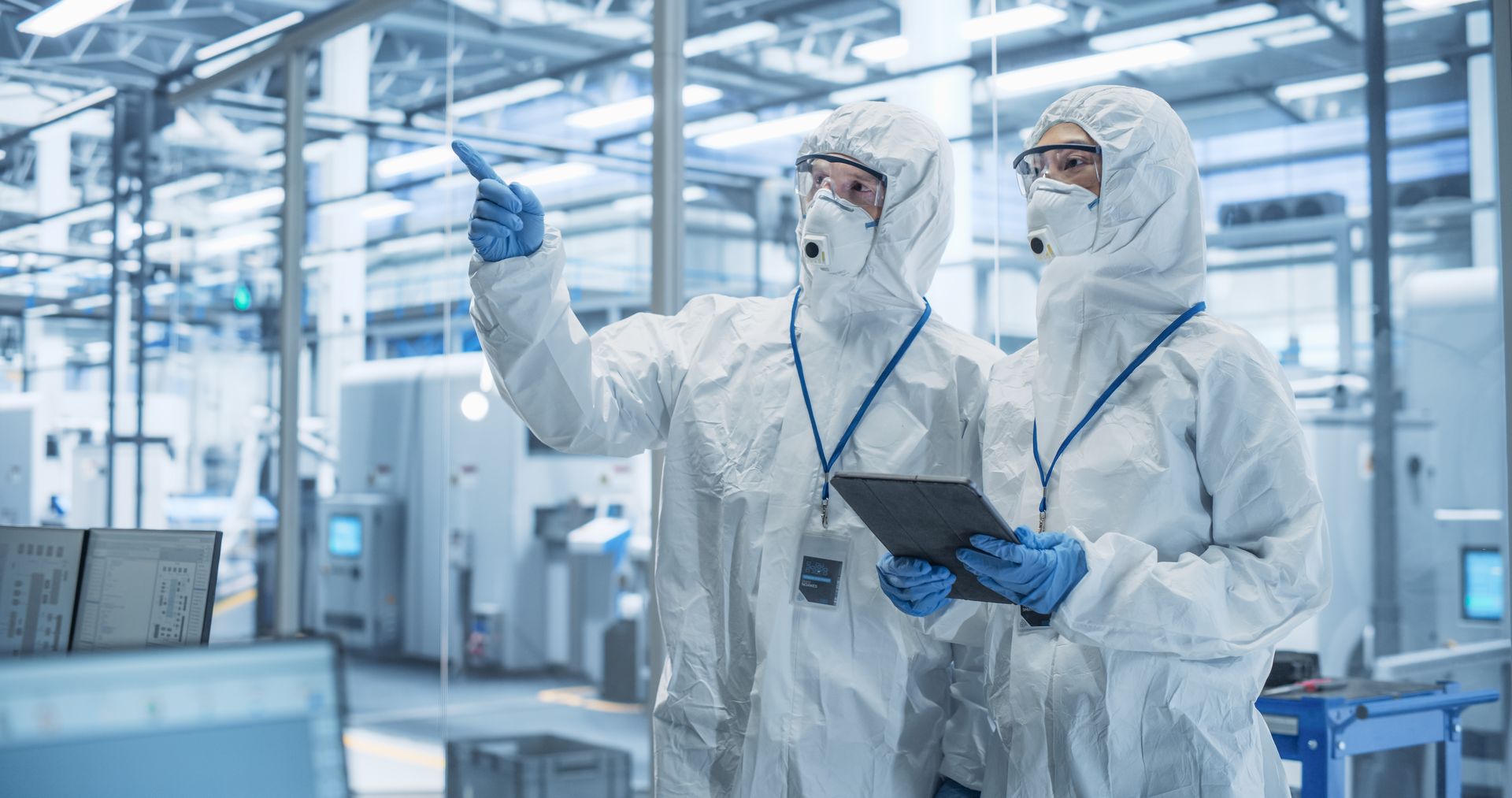
Managing Humidity and Temperature in Cleanrooms
Kjeld Lund May 2, 2025
Electronic Manufacturing in 14644 Cleanroom ISO 6

Introduction


Cleanrooms are critical environments that must adhere to stringent contamination control standards, primarily to protect the integrity of sensitive processes and products. In industries like pharmaceuticals, biotechnology, aerospace, semiconductor manufacturing, and healthcare, even the smallest contaminant can have a devastating effect on product quality, safety, and regulatory compliance. While particle contamination is the most commonly discussed issue in cleanroom design, managing environmental factors such as humidity and temperature is equally essential for maintaining the desired cleanroom performance.


Humidity and temperature directly impact both the cleanliness and the performance of processes within the cleanroom, influencing not only the integrity of products but also the comfort and safety of the personnel working in these controlled environments. Maintaining precise control over these factors is therefore crucial to achieving optimal cleanroom conditions.


This article will explore the role of humidity and temperature in cleanroom management, the risks associated with improper control of these factors, and the strategies and technologies used to regulate temperature and humidity within cleanrooms.


The Role of Humidity and Temperature in Cleanroom Performance


In cleanrooms, temperature and humidity affect both the physical properties of materials and the behavior of airborne particles. Each of these factors is tightly regulated to ensure that the cleanroom maintains its classification and that processes are completed without interruption or contamination.


Temperature Control


Temperature control in cleanrooms is typically dictated by the processes that occur within the environment. For instance, the temperature may need to be precisely regulated in areas such as pharmaceutical compounding, semiconductor fabrication, or aerospace testing, where even slight fluctuations can lead to undesirable outcomes.

  1. Impact on Chemical Reactions: In cleanrooms where chemicals are used in manufacturing processes or research, temperature plays a critical role in the efficiency and consistency of chemical reactions. In pharmaceutical production, for example, the temperature must be controlled to ensure that drug compounds are mixed, stored, and processed at optimal temperatures, avoiding any degradation or loss of potency.
  2. Impact on Equipment: Many cleanrooms, particularly those used in semiconductor fabrication and electronics manufacturing, contain sensitive equipment that operates under strict temperature conditions. Equipment can fail or perform poorly if subjected to temperatures that are too high or too low, leading to potential damage to the machinery and compromising product quality.
  3. Thermal Expansion: In environments that deal with sensitive instruments, such as aerospace testing cleanrooms, precise temperature control is necessary to prevent thermal expansion or contraction of materials that could affect measurement accuracy, structural integrity, or functionality.
  4. Human Comfort: The temperature in cleanrooms also affects the comfort and productivity of the personnel. If the temperature is too high, workers may experience fatigue, while temperatures that are too low can lead to discomfort or even impair cognitive performance. Striking a balance between process requirements and worker comfort is essential.


Humidity Control


Humidity management is equally critical in maintaining the quality of processes and products in a cleanroom. Humidity levels—defined by the amount of water vapor present in the air—are crucial for several reasons:

  1. Impact on Electrostatic Discharge (ESD): In cleanrooms dedicated to semiconductor manufacturing or electronics assembly, static electricity can wreak havoc on sensitive components. High humidity levels can help dissipate electrostatic charges by increasing the conductive properties of the air, thus reducing the risk of ESD damage.
  2. Microbial Growth and Contamination: In pharmaceutical or healthcare cleanrooms, where sterile conditions are required, humidity must be tightly controlled to prevent the growth of mold, bacteria, or other microorganisms. High humidity levels can create favorable conditions for microbial growth, while very low humidity can cause dry air that leads to particles and contaminants being more easily carried through the air.
  3. Material Properties: In industries such as aerospace or biotechnology, humidity can impact the physical properties of materials, such as polymers, adhesives, or coatings. Excessive humidity can affect the curing process of certain materials, while too little humidity can cause brittleness or cracking.
  4. Worker Comfort and Health: Similar to temperature, improper humidity levels can affect the comfort and health of personnel. High humidity can cause discomfort, fatigue, and dehydration, while low humidity can lead to dry skin, respiratory problems, and increased susceptibility to colds and other illnesses.


The Risks of Improper Temperature and Humidity Control


Improper regulation of temperature and humidity in cleanrooms can lead to several problems:

  1. Product Contamination: High humidity can cause condensation, which can lead to contamination on surfaces, equipment, or products. This is particularly problematic in environments such as pharmaceutical manufacturing, where sterility is paramount. Excess moisture can also cause corrosion, potentially damaging sensitive instruments.
  2. Degradation of Product Quality: In some industries, temperature and humidity must be maintained within very tight tolerances. For example, in semiconductor manufacturing, even small temperature fluctuations can affect the performance of microchips, leading to failures in product yields. Similarly, in the pharmaceutical industry, improper storage conditions can cause chemical degradation of drugs, reducing their efficacy.
  3. Compromised Process Integrity: Certain cleanroom processes, such as drug compounding, semiconductor fabrication, or coating applications, rely on very specific temperature and humidity conditions. Deviations from these conditions can lead to defects or suboptimal results, thus undermining the integrity of the manufacturing process.
  4. Health and Safety Issues: For personnel working in cleanrooms, poorly managed temperature and humidity can create an unsafe environment. Low humidity can cause discomfort and dry out respiratory passages, increasing the risk of infections. High humidity, on the other hand, can increase the likelihood of mold growth, leading to health risks for cleanroom operators.


Managing Temperature and Humidity in Cleanrooms


Managing temperature and humidity in cleanrooms involves several key strategies, from selecting the appropriate HVAC (Heating, Ventilation, and Air Conditioning) systems to continuous monitoring and adjustment of conditions. Below are the best practices for controlling these variables:


1. HVAC Systems for Temperature and Humidity Control


Cleanrooms are typically equipped with specialized HVAC systems designed to maintain precise control over temperature and humidity levels. These systems can include:

  • Air Handling Units (AHUs): These units are responsible for regulating the temperature and humidity of the incoming air. They use advanced filtration and dehumidification processes to ensure that the air entering the cleanroom is free of contaminants and at the desired conditions.
  • Humidity Control Units: In addition to standard HVAC units, many cleanrooms are equipped with dehumidifiers or humidifiers that can adjust the moisture levels in the air. These systems often use advanced sensors to measure humidity and make automatic adjustments to keep it within acceptable ranges.
  • Temperature Control Units: Depending on the cleanroom’s requirements, temperature control units such as chillers, heating coils, and thermal storage systems can be used to regulate the temperature. These systems can be integrated with the cleanroom’s air handling system for precise temperature management.


2. Continuous Monitoring


To ensure that temperature and humidity remain within the acceptable range, continuous monitoring is crucial. Cleanroom environments are typically equipped with temperature and humidity sensors that constantly track these variables. Data from these sensors is sent to a central control system, where it is analyzed and used to make real-time adjustments to the HVAC system. Many modern systems allow for automated adjustments based on preset parameters.


Sensors and monitoring systems must be regularly calibrated to ensure their accuracy. These monitoring systems also help in maintaining compliance with regulatory standards by providing reliable data for audits and inspections.


3. Environmental Control Standards


The specific temperature and humidity levels that must be maintained in a cleanroom depend on the cleanroom's classification, the type of work being performed, and the standards set by regulatory agencies. For instance:

  • ISO Class 1 to Class 5 Cleanrooms: These cleanrooms require extremely tight control over both temperature and humidity, often in the range of 18°C to 22°C (64°F to 72°F) for temperature, and 30-60% relative humidity for humidity. These standards ensure that the cleanroom environment remains stable for sensitive production processes, such as semiconductor fabrication or high-grade pharmaceutical manufacturing.
  • Pharmaceutical Cleanrooms: The temperature and humidity levels in pharmaceutical cleanrooms are often defined by GMP (Good Manufacturing Practices) standards. These facilities may need to maintain a temperature range of 18°C to 25°C (64°F to 77°F) and a relative humidity range of 30% to 65%.


4. Redundancy and Backup Systems


Given the critical nature of temperature and humidity control, cleanrooms often incorporate redundant systems to ensure that any failure in the primary system does not compromise cleanroom conditions. These can include backup power supplies, redundant air handling units, and fail-safe systems that alert operators to any deviations from acceptable conditions.


5. Routine Maintenance


To ensure the ongoing performance of HVAC systems and to avoid costly breakdowns, routine maintenance is essential. This includes regular checks of air filters, humidity control systems, and temperature control units, as well as cleaning and servicing of sensors and other monitoring equipment.


Conclusion


Managing temperature and humidity in cleanrooms is essential for maintaining product quality, process integrity, and personnel safety. These factors affect not only the physical environment but also the behavior of particles, chemicals, and materials, all of which are vital to cleanroom operations. The use of advanced HVAC systems, continuous monitoring, and adherence to industry-specific environmental standards ensures that cleanrooms maintain the desired conditions at all times. By implementing proper temperature and humidity control measures, cleanroom operators can safeguard the success of their processes, enhance operational efficiency, and meet regulatory compliance standards.


Read more: All About Cleanrooms - The ultimate Guide

Gold logo with the number
By Kjeld Lund February 6, 2026 February 4, 2026
Cleanroom expertise: design, construction, and compliance from 14644 Cleanroom At 14644 Cleanroom, we understand that a successful cleanroom is much more than just a sterile environment. It’s a meticulously designed and controlled space, critical for protecting sensitive processes, products, and personnel. Since 1992, we’ve been at the forefront of cleanroom technology, helping businesses like yours navigate the complexities of cleanroom design, construction, operation, and certification. With over 100 cleanroom projects under our belt, our goal is to provide impartial guidance that helps you limit your liability and ensure unwavering compliance with international standards. Whether you're developing a new facility, upgrading an existing one, or simply seeking expert advice, our team is equipped with the knowledge and experience to guide you every step of the way. We partner with end-users, architects, contractors, and consulting engineers, offering comprehensive services tailored to your unique requirements. What exactly is a cleanroom? A cleanroom is an engineered space where the concentration of airborne particles is rigorously controlled to specific limits. This control extends beyond just dust particles; it includes airborne microbes, aerosol particles, and chemical vapors. Achieving and maintaining these conditions requires precise management of factors such as temperature, humidity, and pressure. The fundamental purpose of a cleanroom is to minimize contamination, which can be critical for a wide range of industries, including pharmaceuticals, biotechnology, microelectronics, and medical device manufacturing. The level of cleanliness required in a cleanroom varies significantly depending on the application. This is why cleanrooms are classified according to strict international standards such as ISO 14644, which we specialize in. Each classification dictates the maximum number of particles of a specific size allowed per cubic meter of air. Understanding these classifications and ensuring your facility meets them is paramount for product integrity and regulatory compliance. Our holistic approach to cleanroom solutions We believe in a holistic approach to cleanroom solutions, focusing on minimizing risks, optimizing efficiency, and providing future-proof facilities. Our involvement starts at the conceptual stage and extends throughout the operational life of your cleanroom. This comprehensive support ensures that every aspect, from initial planning to ongoing maintenance, aligns with your strategic objectives and regulatory obligations. Cleanroom design: foundational excellence The success of any cleanroom project hinges on its initial design. Our expert consulting services begin with developing robust User Requirement Specifications (URS) . This crucial step ensures that all functional, operational, and regulatory needs are clearly defined from the outset. We work closely with your team to translate your specific requirements into a detailed design brief, forming the bedrock for a compliant and efficient cleanroom. Our experience gained from over 100 cleanroom projects allows us to anticipate challenges and implement optimal solutions during this critical phase. Good design isn't just about meeting current standards; it's about anticipating future needs and technological advancements. We consider factors like workflow, energy efficiency, cleanroom classification, and material selection to create a design that is not only effective but also sustainable and scalable. Cleanroom construction: quality and precision Once the design is finalized, meticulous construction is essential. We provide expert guidance during the construction phase, including validating supplier quotations and overseeing the build. Our impartial advice helps ensure that construction adheres to the highest standards of quality, materials, and processes, preventing costly errors and delays. We act as your advocate, ensuring that contractors deliver on their promises and that the cleanroom is built exactly to specifications. Our project management services further ensure that the cleanroom construction stays on track, within budget, and meets all regulatory milestones. We understand the specific challenges associated with cleanroom builds and leverage our extensive experience to mitigate risks effectively. For more on how we manage projects, visit our project management page. Cleanroom operation: maintaining peak performance A cleanroom’s effectiveness is only as good as its ongoing operation and maintenance. We offer extensive support for cleanroom operations, including advice on essential cleanroom accessories , garments, and cleaning protocols. Proper operational procedures are vital to sustain the integrity of your controlled environment. We help you develop and implement best practices for personnel gowning, material transfer, and environmental monitoring. Understanding and controlling potential sources of contamination, such as human presence and equipment, is a continuous process. We guide you in establishing robust standard operating procedures (SOPs) that ensure consistent performance and compliance. Our aim is to empower your team with the knowledge and tools to operate your cleanroom efficiently and safely. Cleanroom validation & certification: ensuring compliance Validation and certification are non-negotiable for any cleanroom. We specialize in navigating complex regulatory frameworks, including ISO 14644, FS209E, EU GMP ABCD, and USP 797, 800, 825. Our services include comprehensive cleanroom validation and cleanroom certification , ensuring your facility meets all required international standards. Compliance is not a one-time event; it's an ongoing commitment. We help you establish robust validation master plans and conduct routine certifications to demonstrate continuous adherence to regulatory requirements. This proactive approach helps you limit your liability and build trust with regulatory bodies and clients. Our expertise in these diverse global standards provides you with a competitive edge, ensuring your cleanroom is recognized globally for its high standards. Essential elements for every cleanroom A functional cleanroom relies on more than just its walls and air filtration system. The right accessories, garments, and cleaning protocols are crucial for maintaining the controlled environment. We provide expert recommendations and guidance on these vital components: Cleanroom Accessories: From specialized workstations to pass-through boxes, we advise on the accessories that enhance efficiency and maintain sterility. Cleanroom Storage and Furniture: Proper storage solutions and furniture are designed to minimize particle generation and facilitate easy cleaning. See our solutions at cleanroom storage and furniture . Cleanroom Garments: The choice and use of specific cleanroom garments are critical for preventing personnel-borne contamination. Cleanroom Cleaning Protocols: Meticulous and documented cleaning procedures are fundamental to sustaining the cleanroom classification. Learn more about effective cleanroom cleaning . Each of these elements plays a pivotal role in the overall integrity of your cleanroom. By integrating them correctly, you ensure a consistent and compliant operational environment. Why choose 14644 Cleanroom? Choosing the right partner for your cleanroom needs is crucial. Since 1992, we have provided impartial, expert advice that empowers our clients. Our extensive experience, spanning over 100 cleanroom projects , means we bring unparalleled knowledge to every challenge. We actively contribute to shaping industry best practices and upholding the highest standards of cleanroom integrity. Our commitment is simple: to help you achieve and maintain optimal cleanroom performance while minimizing risks and ensuring full compliance. We speak your language and understand the specific demands of your industry, whether you operate under ISO 14644, FS209E, EU GMP ABCD, or USP 797, 800, 825 requirements. Our services are designed to protect your investments and enhance your operational excellence. Ready to discuss your cleanroom project? Contact us today to learn how our expertise can benefit you. We are located at Strandvejen 23, DK 6000 Kolding. You can reach us by phone at +45 5160 6457 or email us at kl@14644.dk. Let's build a cleaner future together. Optimizing your cleanroom for efficiency and future growth Beyond basic compliance, we focus on helping you optimize your cleanroom for long-term efficiency and adaptability. This includes advising on advanced filtration technologies for enhanced air quality, energy-efficient designs, and modular cleanroom solutions that can scale with your business. Our goal is to provide a cleanroom solution that is not only compliant today but also future proof for tomorrow's challenges. Consider the impact of your cleanroom on global manufacturing . A well-designed and operated cleanroom contributes significantly to product quality, reducing waste, and increasing overall productivity. We're here to help you achieve these benefits. Frequently asked questions about cleanrooms What are the primary functions of a cleanroom? The primary functions of a cleanroom are to control airborne particulate contamination, maintain specified environmental parameters (temperature, humidity, pressure), and protect sensitive processes, products, and personnel from environmental contaminants. This control is critical for industries requiring high levels of sterility and precision. How is a cleanroom classified? Cleanrooms are primarily classified according to the ISO 14644-1 standard, based on the maximum allowable concentration of airborne particles of a specified size per cubic meter of air. Other standards like FS 209E, EU GMP, and USP are also used depending on the industry and region. We have expertise in all these standards. Why is ongoing validation important for a cleanroom? Ongoing validation and certification are crucial for a cleanroom to demonstrate continuous compliance with regulatory standards and maintain its specified performance. This includes regular testing of particulate levels, airflow, pressure differentials, and environmental conditions. It helps identify potential issues early and ensures the cleanroom remains fit for purpose, helping you to limit your liability . What types of industries utilize cleanrooms? A wide range of industries rely on cleanrooms, including pharmaceuticals, biotechnology, medical device manufacturing, microelectronics, aerospace, optics, nanotechnology, and even some food and beverage production facilities. Any industry where contamination can compromise product quality or safety will likely utilize a cleanroom. What role do cleanroom garments play in contamination control? Cleanroom garments are essential for preventing human-generated contamination, such as skin flakes, hair, and clothing fibers, from entering the controlled environment. They are made from low-shedding fabrics, designed to prevent particle release, and must be donned and doffed according to strict protocols. Proper garment selection and use are critical for maintaining cleanroom integrity. Read more here: The ultimate Cleanroom Guide
Scientist in blue gloves examining test tubes in a lab, with a DNA strand overlay.
By Kjeld Lund 30 January, 2026 January 29, 2026
Lifecycle Qualification Strategies for Modern Cleanrooms (DQ–IQ–OQ–PQ) 1. Introduction Lifecycle qualification is a foundational framework for ensuring that modern cleanrooms consistently meet the performance, compliance, and product-protection requirements defined by ISO 14644 , GMP Annex 1 , and related regulatory expectations. The DQ–IQ–OQ–PQ sequence provides a structured, evidence-driven method to verify that a cleanroom is designed correctly, installed correctly, operating correctly, and performing consistently under real process conditions. This article outlines practical, engineering-grounded lifecycle qualification strategies suitable for new cleanroom facilities, major retrofits, and ongoing performance lifecycle management. 2. Design Qualification (DQ) Design Qualification establishes that the cleanroom design—down to the HVAC architecture, building envelope, process layout, and control strategies—meets the intended functional, regulatory, and risk-reduction requirements. DQ must be fully documented and approved prior to procurement or construction. Key Objectives Demonstrate alignment with user requirements (URS), regulatory standards, and contamination-control risk assessments. Validate the design basis for airflow volume, pressure regime, filtration efficiency, heat loads, and classification goals. Confirm that materials, finishes, and mechanical/electrical systems support cleanability, durability, and cleanroom compatibility. Core Activities URS Development: Defines required cleanliness class (e.g., ISO 7/8 rooms leading to ISO 5 zones), environmental parameters, process flows, and gowning strategy. Basis of Design (BOD) Review: Verifies engineering assumptions including supply air volume, terminal HEPA load, air change rate targets, and pressure cascade. Design Risk Assessment: Evaluates contamination pathways, personnel/material movement, and failure modes (e.g., loss of differential pressure). Drawings and Specification Review: Architectural drawings, HVAC schematics, control diagrams, and finish schedules are checked against URS and applicable standards. DQ Acceptance Criteria All functional requirements traceable to the URS. Design conforms to ISO 14644 requirements, GMP zoning concepts, and classified-area pressure cascade norms. Design risks identified and mitigated with engineering or procedural controls. 3. Installation Qualification (IQ) Installation Qualification verifies that the cleanroom and its systems were installed according to approved design documentation and equipment specifications. IQ is typically executed after construction is complete but prior to HVAC balancing and environmental verification. Key Objectives Confirm correct installation of architectural elements, HVAC components, filtration assemblies, electrical systems, and monitoring devices. Verify that materials and finishes meet certification requirements (e.g., low-VOC, non-shedding, GMP-compatible). Document all utilities, equipment IDs, calibration statuses, and as-built conditions. Core Activities Component Verification: HEPA/ULPA filters, fan filter units (FFUs), terminal housings, ductwork, dampers, valves, and sensors must match approved specifications. Material and Finish Inspection: Wall panels, flooring, doors, pass-throughs, and sealants are checked for fit, compatibility, cleanability, and integrity. As-Built Documentation: Includes redlined drawings, HVAC equipment lists, control sequences, and wiring diagrams. Calibration and Utilities Check: Differential pressure sensors, temperature/humidity probes, and airflow measurement devices are installed, tagged, and calibrated. IQ Acceptance Criteria All equipment installed per manufacturer recommendations and design documents. All sensors and instruments calibrated with traceability. As-built documentation complete and approved. 4. Operational Qualification (OQ) Operational Qualification demonstrates that the cleanroom and its supporting HVAC/control systems operate as designed across the full range of expected environmental and operating conditions. OQ is executed after HVAC commissioning and initial balancing but before introducing process equipment or personnel workflows. Key Objectives Confirm the HVAC system achieves and maintains the required environmental conditions (classification, pressure, temperature, humidity). Demonstrate correct operation of interlocks, alarms, monitoring systems, and control loops. Verify that control logic supports contamination-control requirements, including recovery and cascade stability. Core Activities Airflow and Pressure Verification: Measurement of supply volume, extract volume, and differential pressures between adjacent zones under at-rest conditions. HEPA Integrity Testing: Leak testing using ISO 14644-3 compliant methods (e.g., PAO/DEHS aerosol challenge). Particle Classification Testing: Conduct at-rest classification tests per ISO 14644-1 to confirm compliance with specified cleanroom class. Recovery Testing: Demonstrate the room’s ability to return to classification levels after a particle challenge or simulated disturbance. Alarm and Interlock Testing: Validation of door interlocks, pressure-loss alarms, temperature/humidity deviations, and exhaust/supply failures. Environmental Stability Study: Trending temperature, humidity, and pressure over time to ensure steady-state performance. OQ Acceptance Criteria All environmental parameters meet specified limits under at-rest conditions. All alarms/interlocks operate predictably and within defined tolerances. HEPA filters pass integrity tests with no leaks above allowed limits. Particle counts comply with the ISO class designation. 5. Performance Qualification (PQ) Performance Qualification confirms that the cleanroom performs as required under normal operational conditions, including personnel activity, equipment operation, and process workflows. PQ represents the final verification stage before routine production or regulated use. Key Objectives Validate real-world performance including personnel-generated loads, process equipment heat loads, and operational contamination sources. Demonstrate environmental control and consistency during typical and peak operational states. Establish baseline performance data for future ongoing monitoring. Core Activities Dynamic Classification Testing: Particle sampling during typical operations with personnel, processes, and equipment running. Microbial Monitoring: Viable air and surface sampling following GMP Annex 1 expectations. Temperature/Humidity/Pressure Trending: Confirmation that environmental parameters remain stable during active operations. Process Simulation (Media Fill or Surrogate Operations): For aseptic processes, PQ may include media fills or other simulation protocols. Workflow Verification: Assessment of gowning, personnel behavior, and material transfer methods to ensure contamination control integrity. PQ Acceptance Criteria Cleanroom meets required ISO class under operational conditions (where required by process). Microbial contamination levels remain within specified action and alert limits. Operational conditions do not compromise the pressure cascade or airflow patterns. All critical process simulations meet acceptance criteria. 6. Documentation Structure and Traceability A robust documentation package ensures regulatory compliance and facilitates future audits and requalification. Each lifecycle stage must include: Qualification protocols (DQ/IQ/OQ/PQ) with clearly defined acceptance criteria. Traceability matrices linking URS → DQ → IQ/OQ/PQ tests. Calibration records, commissioning reports, and as-built drawings. Deviations, corrective actions, and risk assessments. A final qualification summary report consolidating results and confirming readiness. 7. Integration With ISO 14644 and GMP Annex 1 Modern cleanroom qualification strategies must continuously reflect international standards and regulatory updates. ISO 14644 Part 1: Air cleanliness classification by particle concentration. Part 2: Monitoring requirements for demonstrating continued compliance. Part 3: Test methods for cleanroom performance (airflow, recovery, HEPA integrity). Part 4: Design, construction, and start-up best practices. Part 16: Energy efficiency considerations. GMP Annex 1 adds requirements for: Contamination Control Strategy (CCS). Formal risk management throughout the cleanroom lifecycle. Demonstrable environmental control during sterile operations. Expected performance and monitoring frequencies for classified areas. Qualification strategies must ensure that the DQ–IQ–OQ–PQ lifecycle aligns with every relevant element of the CCS, including airflow design, cleaning effectiveness, gowning, and monitoring programs. 8. Requalification and Ongoing Lifecycle Management Qualification does not end with PQ. Cleanrooms require periodic requalification, especially HEPA integrity, airflow verification, and environmental monitoring performance assessments. Typical requalification intervals: HEPA integrity: annually (or more often for high-risk areas). Airflow/pressure/temperature/humidity: semiannual to annual, depending on risk. ISO classification tests: typically annual for high-grade areas; up to biennial for lower-risk rooms, based on documented risk justification. Changes in configuration, HVAC equipment, control logic, or process flows should trigger change control and potentially partial requalification. 9. Conclusion Effective lifecycle qualification using the DQ–IQ–OQ–PQ framework is fundamental for ensuring that modern cleanrooms are engineered, constructed, and operated to meet rigorous contamination-control requirements. A disciplined approach grounded in ISO 14644, GMP Annex 1, and established engineering practice produces cleanrooms that operate with reliability, safety, and regulatory confidence. By maintaining robust documentation, integrating risk management, and committing to ongoing monitoring and requalification, facility owners and operators can ensure long-term cleanroom performance and compliance. Read more here: About Cleanrooms: The ultimate Guide
Person in protective suit crouches near equipment in a sterile white hallway.
By Kjeld Lund January 23, 2026 January 22, 2026
Cleanroom Audit and Compliance Checklist 1 Introduction A structured cleanroom audit is essential for verifying compliance with ISO 14644, GMP guidelines, and internal quality standards. Routine audits help identify deviations, ensure consistent contamination-control practices, and maintain readiness for regulatory inspections. A comprehensive checklist provides a systematic framework for evaluating design integrity, operational performance, documentation, training, and ongoing environmental control. This article presents a detailed checklist that organizations can use to assess cleanroom compliance and strengthen their quality systems. 2 Facility Design and Structural Integrity Audits should begin with verification of physical cleanroom features that influence cleanliness, containment, and maintainability. Key points include: Smooth, cleanable wall, floor, and ceiling finishes Intact seals around penetrations, doors, utilities, and windows Adequate lighting and properly sealed fixtures Flush-mounted hardware to prevent particle accumulation Verified material compatibility with cleaning agents Condition of airlocks, pass-throughs, and gowning rooms Correct zoning and separation of clean and unclean pathways Document findings related to damage, wear, or integrity concerns that may compromise contamination control. 3 HVAC and Airflow Performance The HVAC system is the core of cleanroom classification and stability. Audits must evaluate whether systems operate within validated parameters. Checklist items include: Air change rates consistent with ISO classification and design specifications Correct pressure cascades between adjacent rooms HEPA/ULPA filter integrity testing data (e.g., DOP/PAO results) Airflow direction and uniformity, verified through recent testing Temperature and humidity within defined limits Vibration or noise issues affecting airflow stability Maintenance and calibration records for HVAC controls and sensors Any deviation in airflow performance should trigger further investigation into system balancing or filter loading. 4 Environmental Monitoring Program Auditors must verify that environmental monitoring (EM) is executed according to approved procedures and risk-based sampling plans. Key audit checks: Approved EM plan covering viable and nonviable monitoring Defined sampling locations and frequencies Documented alert/action limits aligned with classification Calibration records for particle counters and microbiological equipment Trend reports demonstrating ongoing analysis of data Corrective actions documented for any excursions Qualification records for sampling personnel EM programs must be regularly reviewed and updated based on historical data and process changes. 5 Cleaning and Disinfection Controls Cleaning and disinfection routines ensure the cleanroom maintains consistent cleanliness levels. The audit should confirm both procedural compliance and record accuracy. Checklist items: Current SOPs for cleaning frequency, agents, and methods Verified disinfectant rotation schedules Logs with complete operator signatures, timestamps, and agent lot numbers Evidence that correct contact times are achieved Storage and expiration control for cleaning agents Validation or qualification data for new agents or methods Inspect actual cleaning tools and carts to confirm they meet defined specifications. 6 Gowning, Behavior, and Personnel Practices Human operators are a major contamination source. Audits must confirm that personnel follow approved procedures and maintain proper hygiene and conduct. Verification points: Approved gowning SOPs with clear donning/doffing sequences Compliance with garment integrity requirements Proper use of gloves, masks, and other PPE Behavior standards: no unnecessary movement, no personal items, controlled communication Training records demonstrating competence in gowning procedures Observations of actual operator behavior during operations Nonconformities typically point to training gaps or insufficient procedural clarity. 7 Material, Equipment, and Tool Control Materials and equipment entering cleanrooms must follow validated preparation and transfer procedures. Audit checks include: Defined material flow paths with controlled entry/exit points Validated cleaning or sterilization procedures for reusable tools Inspection of pass-through chambers for proper function and cleanliness Calibration status for all instruments used in the cleanroom Maintenance records for process tools Labeling and identification of materials, including expiration dates Procedures preventing cross-contamination or mix-ups Improper material control often correlates with contamination excursions. 8 Documentation and Recordkeeping Auditors must examine documentation for accuracy, currency, and compliance with GMP and ISO expectations. Checklist points: Current controlled SOPs accessible at point of use Revision histories and approval signatures Completed logbooks with no gaps, overwriting, or missing entries Batch records and monitoring sheets completed contemporaneously Deviation and CAPA (Corrective and Preventive Action) documentation Document retention practices aligned with regulatory requirements Clear links between training and document revisions Documentation quality reflects the maturity of the cleanroom’s quality system. 9 Change Control and Validation Changes to processes, equipment, or environmental controls must be documented and assessed for contamination and compliance impact. Audit criteria: Defined change-control procedures and responsibilities Impact assessments addressing cleanroom classification or validation needs Updated drawings, SOPs, and training following approved changes Validation reports (IQ/OQ/PQ) for new installations or modifications Periodic review of change-control logs Lack of disciplined change control is a major audit finding in regulated industries. 10 Waste Management and Containment Appropriate waste control supports both contamination management and safety. Checklist items: Segregated waste streams (biological, chemical, general) Clearly labeled containers with proper closures Defined removal frequencies Safe handling procedures for hazardous waste Clean and organized waste staging areas Documentation of waste transfer or disposal Improper waste handling can compromise room classification and operator safety. 11 Safety Systems and Emergency Readiness Cleanroom audits must verify that safety controls function correctly and remain compliant. Audit checks include: Functionality of emergency shutoffs and alarms Availability and condition of spill-response kits Fire protection systems (sprinklers, extinguishers, alarms) Gas detection and monitoring (if applicable) Trained emergency response personnel Documented and rehearsed emergency procedures Emergency readiness protects personnel and maintains regulatory compliance. 12 Training and Competency Personnel competency must be evaluated continuously. Checklist includes: Training matrices linked to job roles and SOP numbers Records of initial training, periodic retraining, and qualification Assessments verifying operator understanding and performance Training updates in response to procedural changes Defined qualification requirements for auditors and supervisors Well-documented training prevents procedural drift and ensures consistent performance. 13 Audit Trails, CAPA, and Continuous Improvement Effective audits generate actionable insights. Auditors must verify that findings are handled systematically. Key considerations: Defined process for documenting audit findings Root-cause analysis procedures (e.g., 5-Why, fishbone diagrams) CAPA timelines, responsibilities, and effectiveness checks Trend evaluation across multiple audit cycles Periodic review of quality metrics related to cleanroom performance Continuous improvement strengthens long-term cleanroom integrity and regulatory readiness. 14 Conclusion A comprehensive audit and compliance checklist provides a structured approach for evaluating cleanroom performance, identifying gaps, and sustaining contamination control. By assessing facility design, HVAC performance, environmental monitoring, cleaning practices, personnel behavior, documentation, and emergency readiness, organizations can maintain reliable, compliant cleanroom operations aligned with ISO 14644 and GMP requirements. Routine audits not only ensure regulatory preparedness but also support continuous improvement, helping cleanrooms operate with consistency, safety, and technical excellence. Read more here: About Cleanrooms: The ultimate Guide
Show More